Reachability 9 min read
Why Nobody Answers the Phone Anymore, and How to Reach Customers in 2026
86% of people ignore unknown calls. Here’s why, and how a WhatsApp-first sequence (text, voice note, then call) gets customers back on the line.
By Anthony Dinis, founder of Vocalcom ·
The gist
The short answer
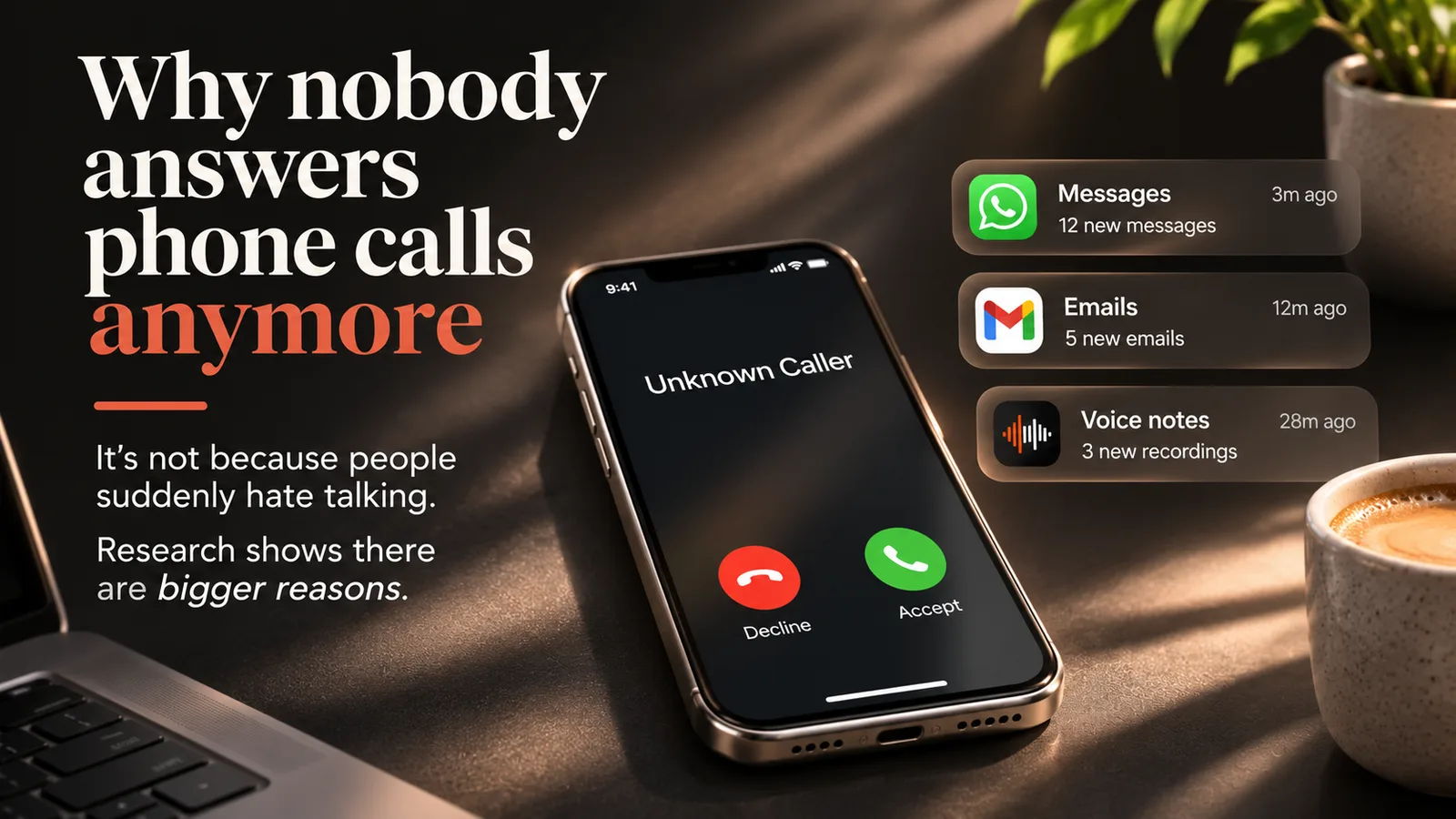
Call someone who doesn’t have your number today and you’ll most likely end up in their voicemail. Or talking to an iPhone that wants your name and the reason for your call. In a 2026 survey, 86% of consumers said they don’t pick up unidentified calls (Hiya, State of the Call 2026).
People still talk on the phone. They just don’t answer calls they weren’t expecting, from numbers they don’t know. So the way back in is to stop surprising them: a short WhatsApp message first, a reply by text or voice note when they have a minute, then a call they’ve agreed to. On WhatsApp, that agreement is part of the platform, and the call lands in the same thread as the messages. Nobody has to explain their problem twice.
01
Why don’t people answer phone calls anymore?
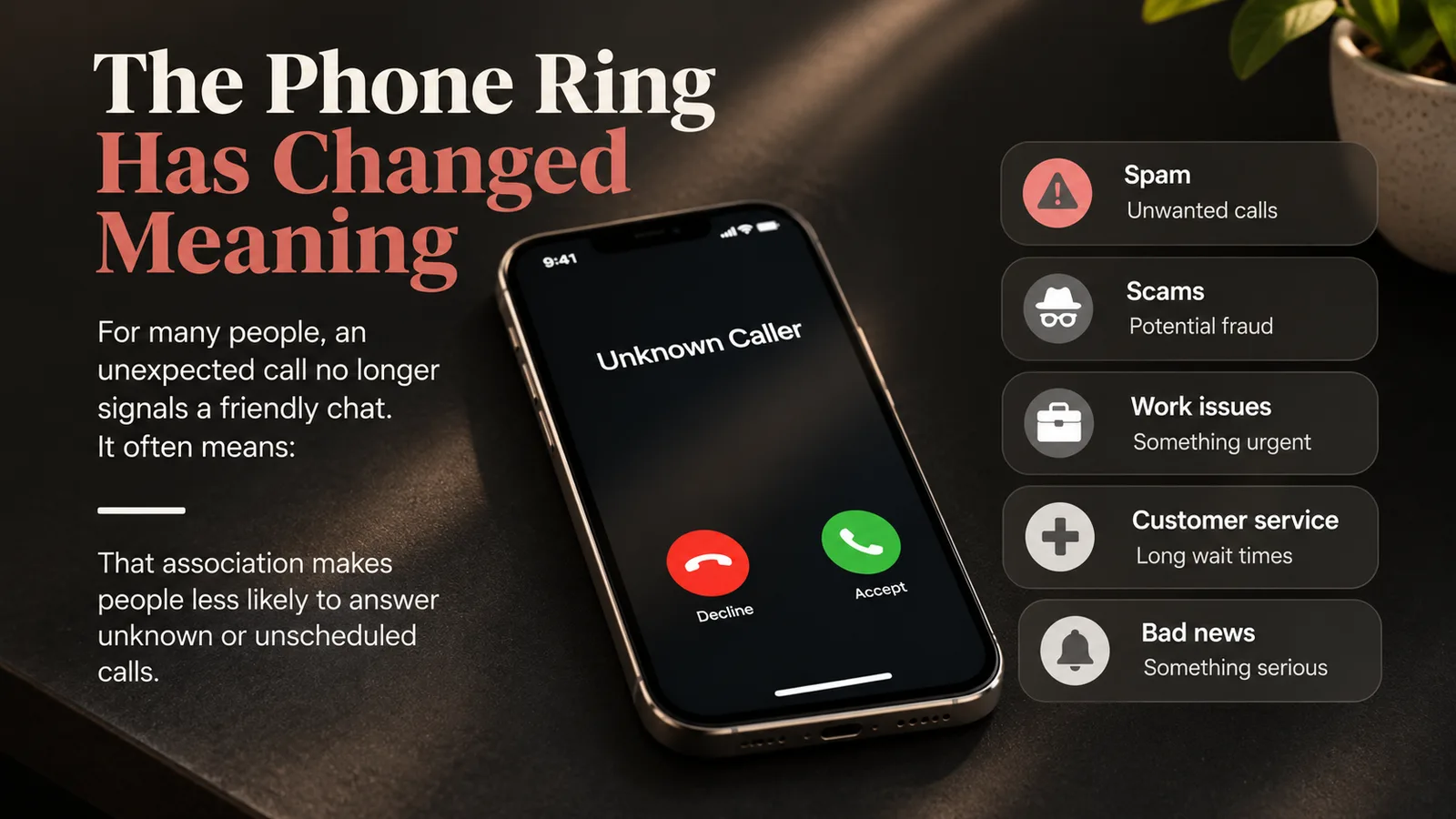
Spam is the obvious culprit, but it isn’t the only one.
Start with trust. Hiya asked more than 12,000 people in the US, Canada, the UK, France, Germany and Spain what they do when an unknown number rings. Only 14% answer right away. 41% wait to see whether the caller leaves a voicemail, and 28% hit decline (Hiya, State of the Call 2026).
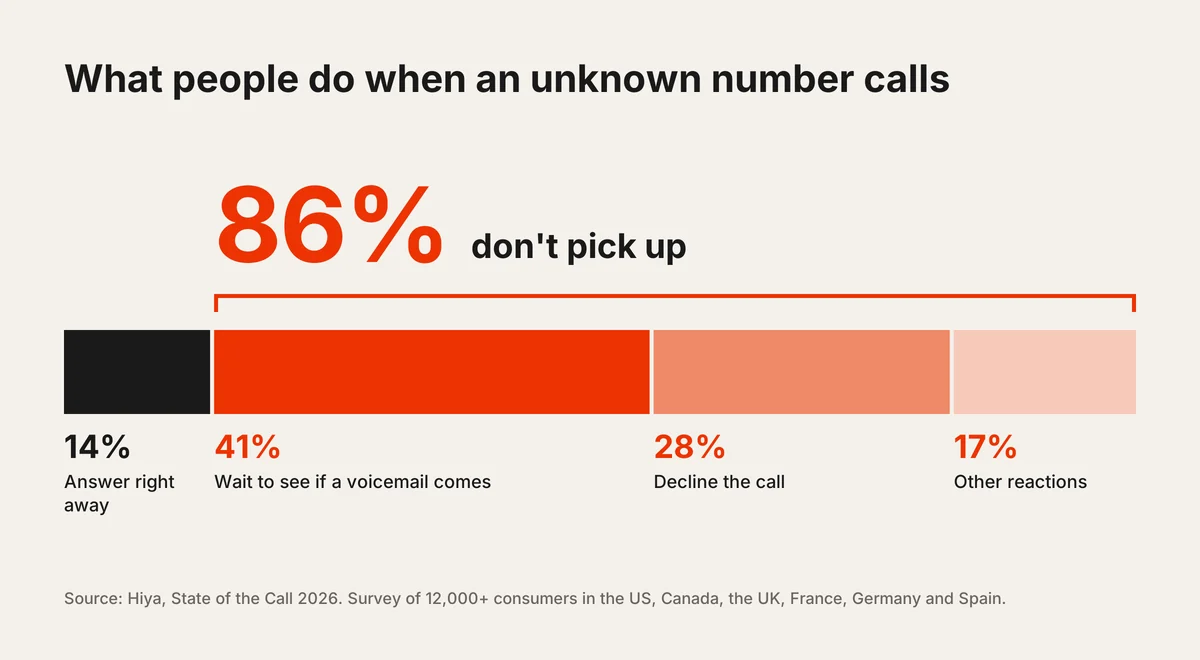
Figure 1. What people do when an unknown number calls (Hiya, State of the Call 2026).
Then there’s the phone itself. Since iOS 26, an iPhone can pick up an unknown call on its own, ask who’s calling and why, and only ring if its owner wants it to (TechRadar). Pixel phones have done something similar for a while. The first “person” your agent talks to is often software.
Habits have changed too. In a 2024 Uswitch survey of 2,000 UK adults, more than half of 18–34s said a surprise call makes them think something bad has happened, and 68% would rather the call was arranged in advance (KTVU, reporting Uswitch). It isn’t only a generational thing: 74% of over-55s named scam calls as a top concern (Fox 5 New York, reporting Uswitch).
02
Is it the same in B2B?
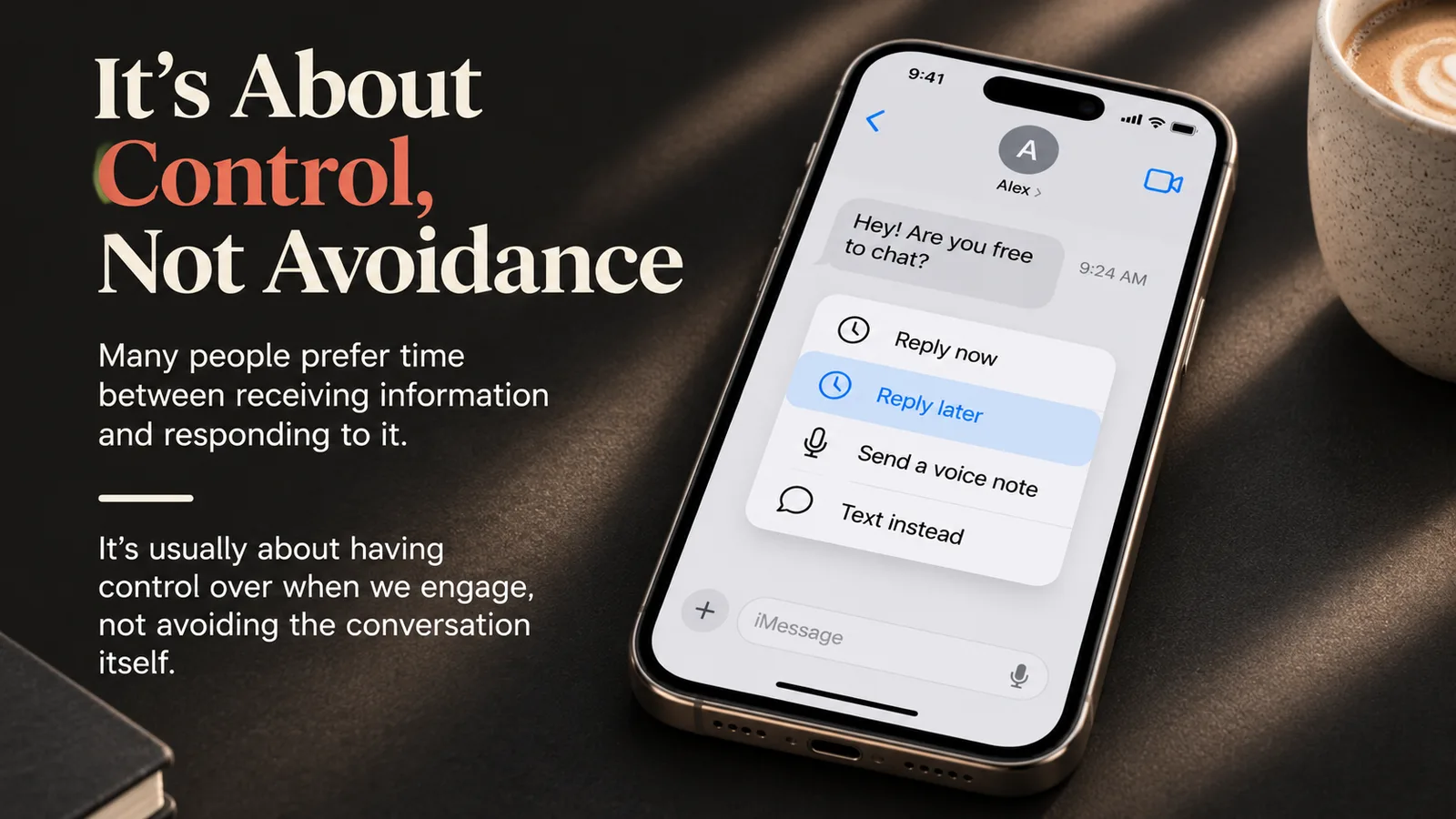
Pretty much. Decision-makers screen their phones like everyone else, and they’d rather do the early research on their own.
In a 2024 analysis of more than 300 million cold calls, Gong found that the average rep got a live prospect on 5.4% of dials, roughly one conversation every 19 calls. Top-quartile reps managed 13.3% (Gong Labs).
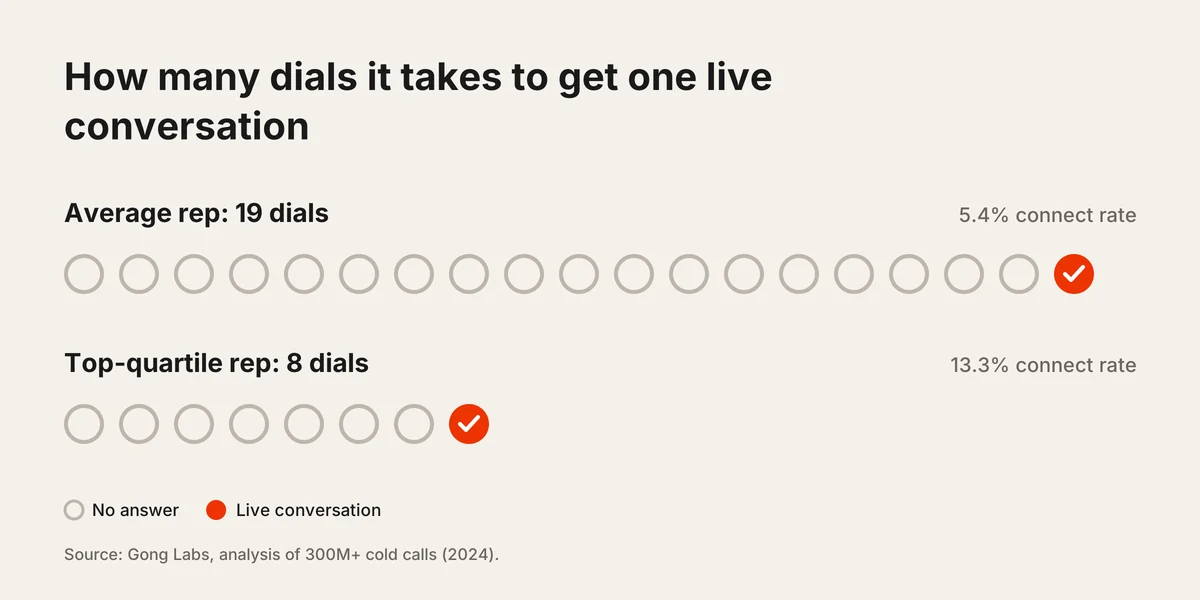
Figure 2. Dials per live conversation in B2B cold calling (Gong Labs, 2024).
Gartner’s buyer surveys point the same way. 67% of B2B buyers now say they’d rather buy without a sales rep, up from 61% in the previous survey (Gartner, March 2026). Yet 69% still go back to a rep to double-check what an AI tool told them (Gartner, via Barchart). They still want to talk to someone. They want to choose when.
03
What does France’s new consent rule change?
Quite a lot, if you sell to consumers. Since August 11, 2026, a business can’t call a consumer to sell them something unless that person agreed beforehand, and the Bloctel opt-out list has been switched off (Journal du Net). The main exception is a call linked to a contract already in progress (Actu-Juridique).
The decree behind it (no. 2026-662 of July 23, 2026) sets a high bar. Consent must be free, specific, informed, unambiguous and revocable, and given through a clear positive action (Le Monde du Droit). B2B calls aren’t covered, although GDPR still applies to them (donneespersonnelles.fr).
You don’t have to sell in France for this to matter. It shows where things are heading: ask first, call second. Teams that already work that way won’t have much to change.
04
Why is WhatsApp the right channel before the call?
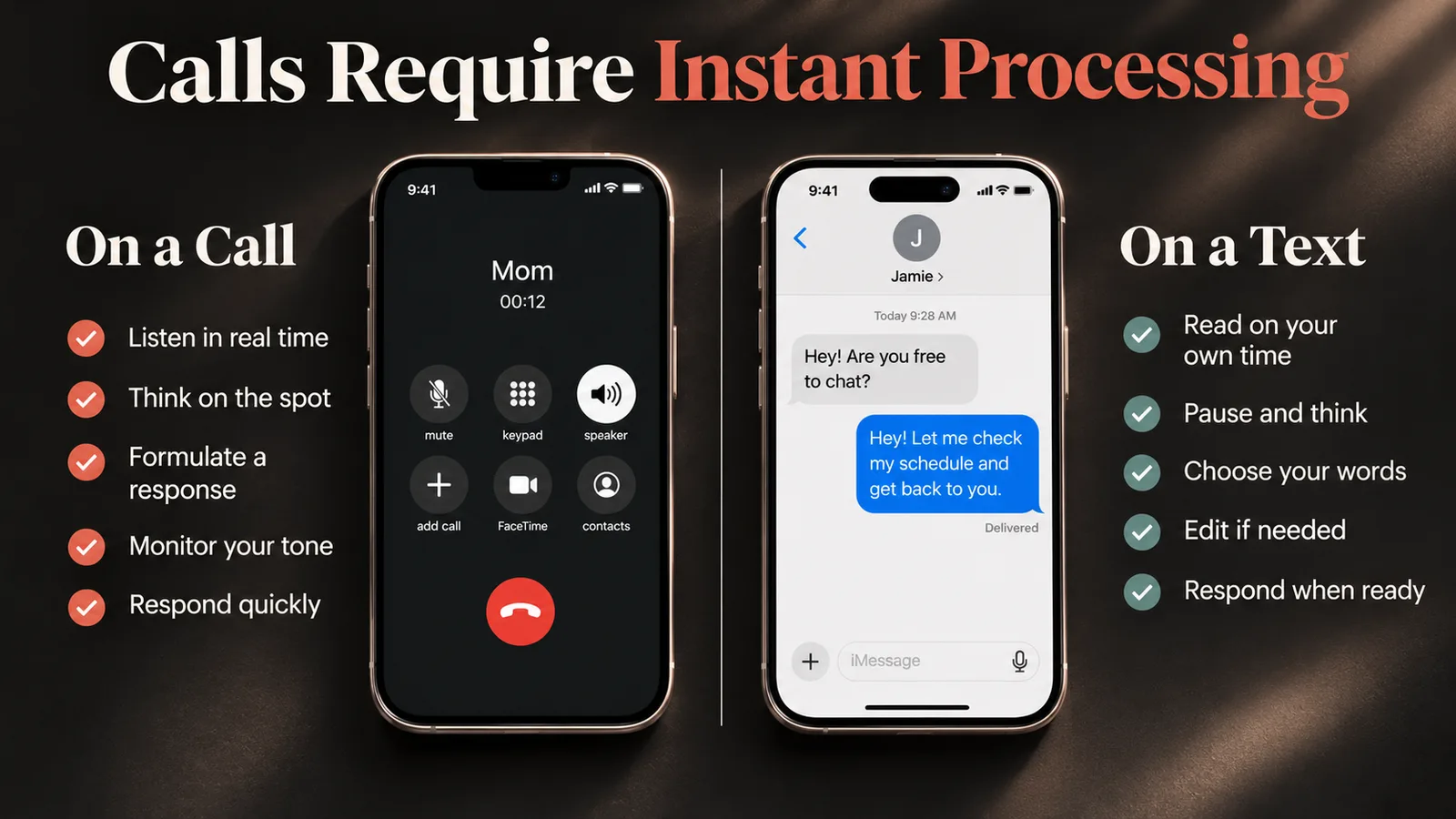
Because it deals with what makes people ignore a call in the first place: they don’t know who’s calling, the timing is bad, and nobody asked them.
The message comes from a business profile, in an app the customer opens every day anyway, rather than from a number their phone may flag or screen out.
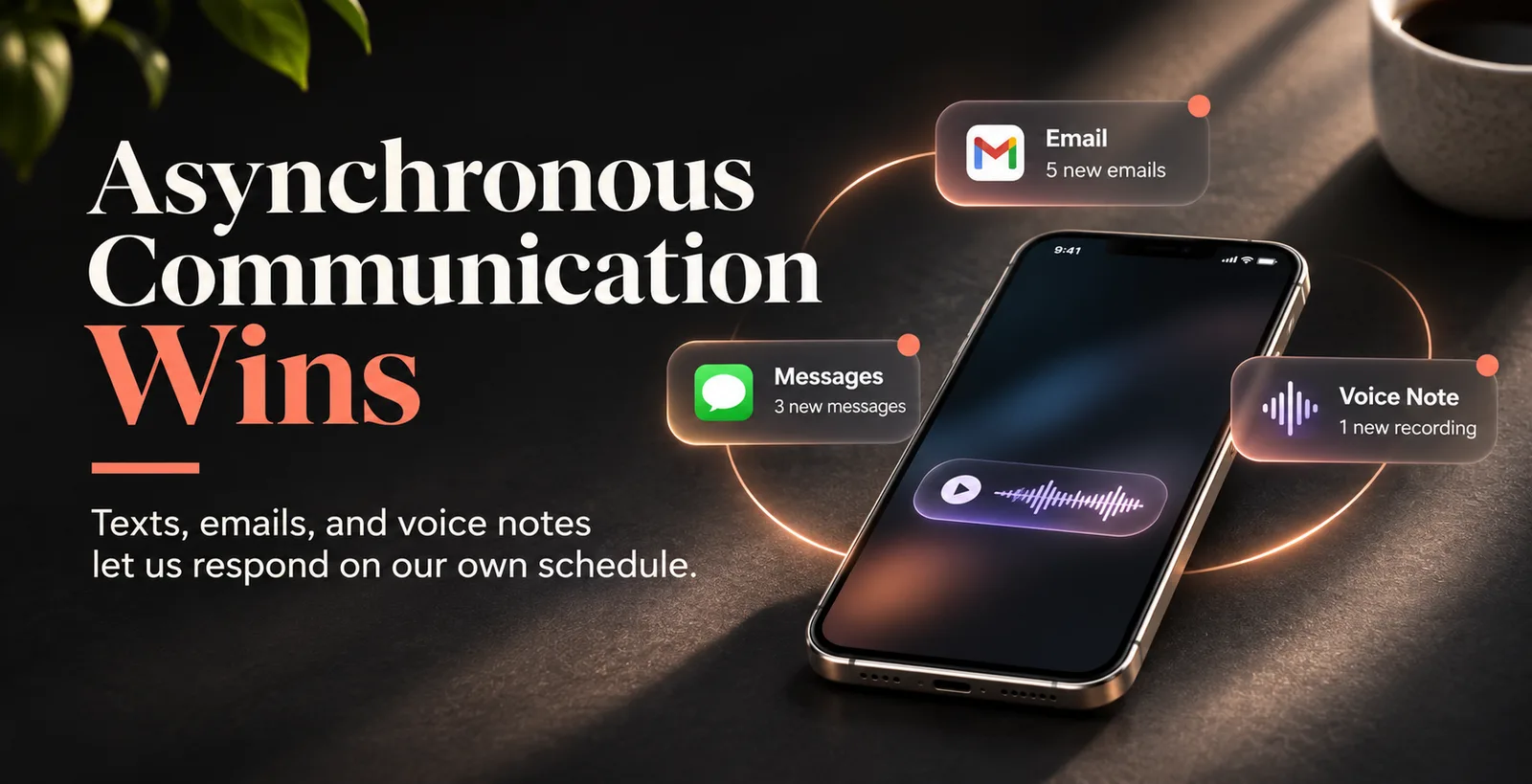
It also waits. The customer can answer by text in a meeting, or send a voice note on the way home. Voice notes are hardly a niche habit: WhatsApp users were sending around 7 billion a day at the company’s last public count (Search Engine Land).
Then there’s permission. A business can only call a WhatsApp user who has allowed it. It can ask in a message. If it has turned on the callback setting, permission also comes automatically when the customer calls first. And the customer can switch it on for good from the business profile (Meta for Developers). In other words, the platform enforces “ask first” for you.
And everything stays together. Messages, voice notes and the call live in one conversation (Chakra Chat), so whoever picks it up, human or AI agent, sees the whole history.
Side by side:
| What matters | Unannounced phone call | SMS | |
|---|---|---|---|
| What the customer sees | A number, often screened or flagged | A sender number or short name | The business profile, in an app they use daily |
| Customer chooses when to engage | No | Yes | Yes |
| Permission to call built in | No | No | Yes |
| Text, voice notes and calls in one thread | No | No | Yes |
| Reach | Every phone | Every phone | Depends on the country (see below) |
05
Text, voice note or call: what’s the right sequence?
Text first, voice if the customer goes there, and the call once they’ve said yes. Warning people that you’re going to call is no small detail, either. In an Australian randomized phone survey of 9,000 mobile numbers, a short SMS sent beforehand took the response rate from 7.7% to 12.4% (PLOS ONE, 2016).
In practice:
- 1Open with a short message: who you are, why you’re writing, one question. Something like: “Hi Sara, Lena from Acme Insurance here. We need one more document for your claim. Can we call you for two minutes, or would you rather sort it out here?”
- 2Let the customer pick the channel. Plenty of people will settle everything by text, and that’s a case closed without anyone’s phone ringing.
- 3Match their format. Voice note in, voice note out. If they write, keep writing.
- 4Ask before you call: send a call permission request, or suggest a time. When the phone rings, they know why.
- 5Call from the same thread, so the agent has everything that’s been said and the customer doesn’t have to start over.
- 6Finish in writing. Two lines summing up the call give the customer something to come back to.
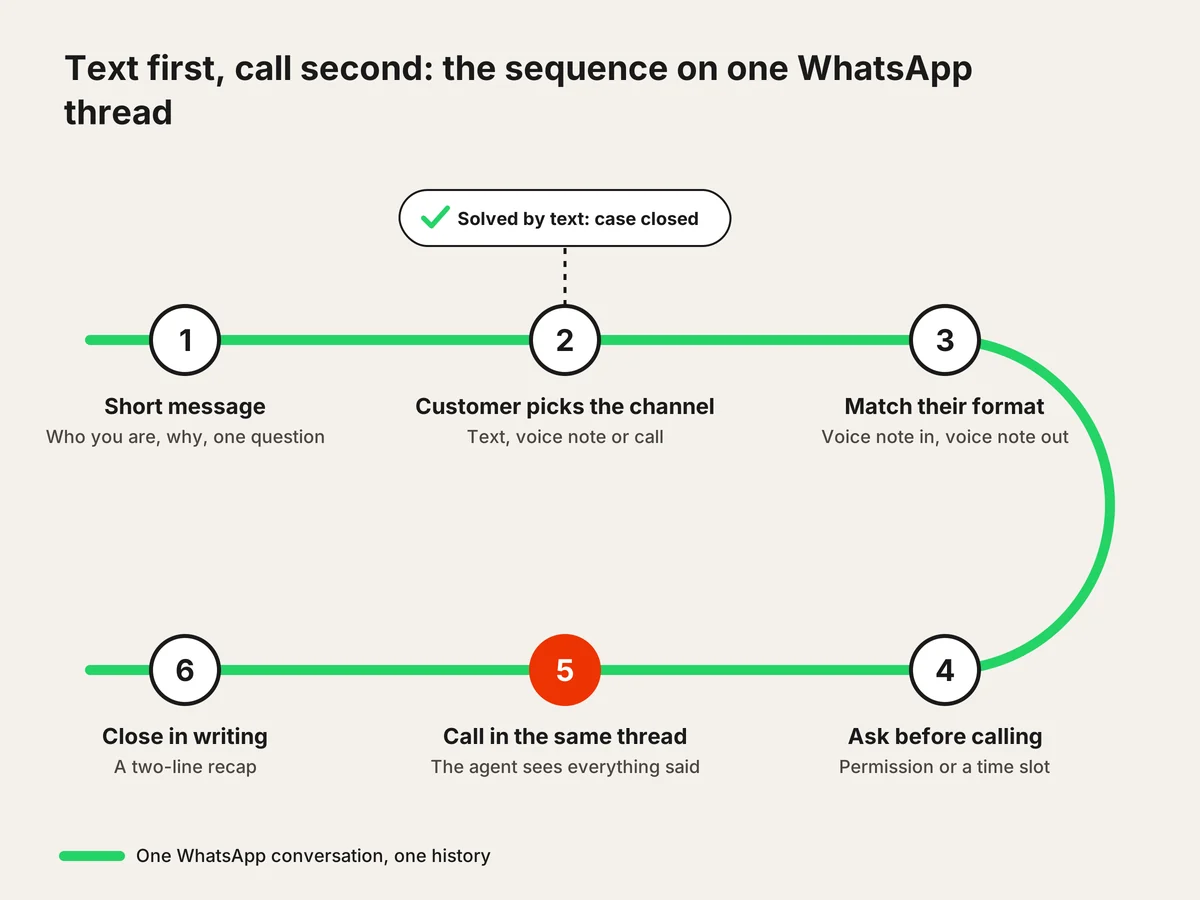
Figure 3. Text first, call second: the whole sequence stays in one WhatsApp conversation.
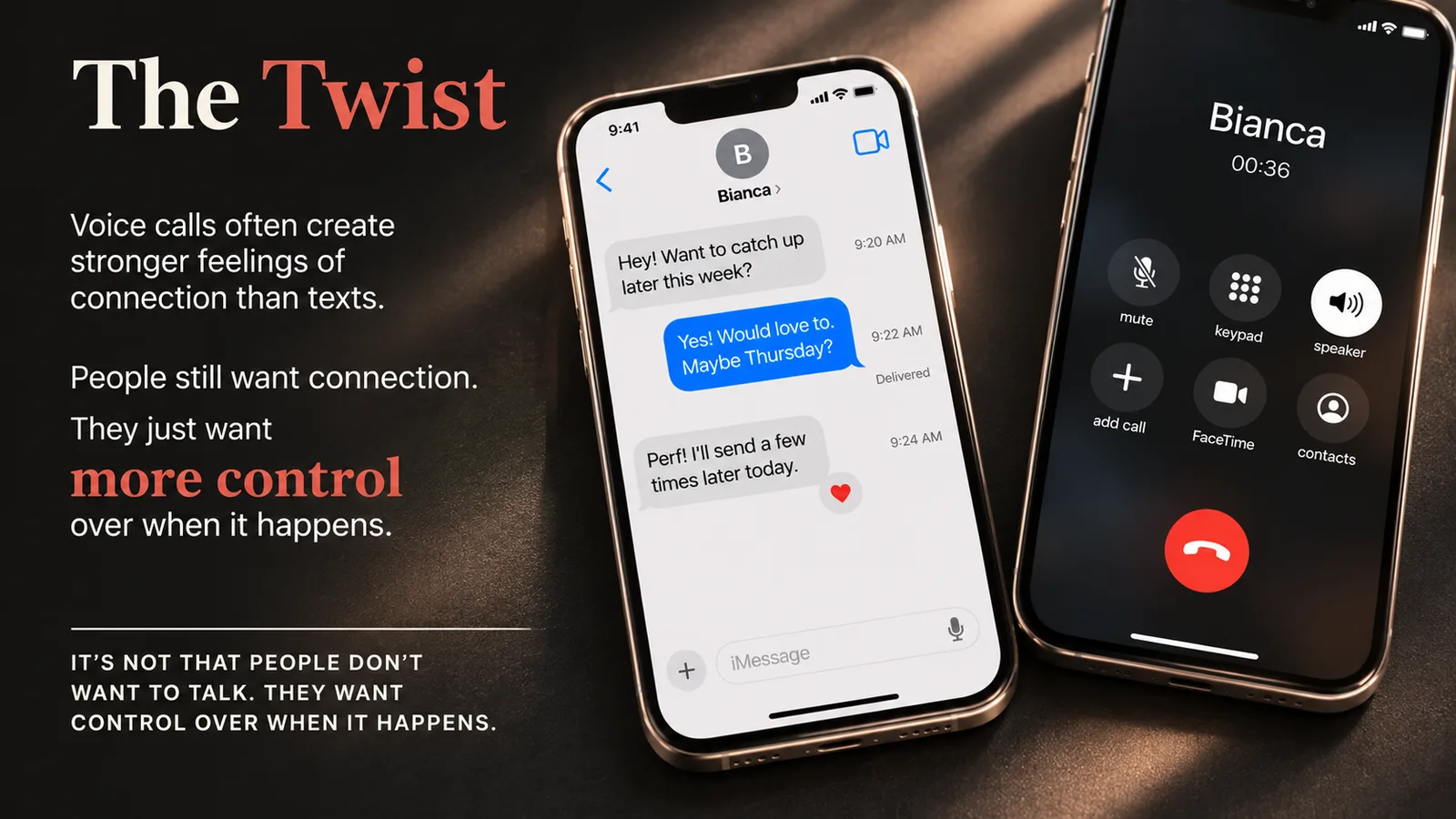
If text works that well, why call at all? Because some things are easier said than typed. Amit Kumar and Nicholas Epley found that phone conversations create more of a bond than people expect, and aren’t any more awkward than typing (Vice). Messages get you the conversation; the call is often where things get settled.
06
When is WhatsApp not the answer?
There are cases, and it’s better to know them up front.
The country matters. WhatsApp is everywhere in Brazil, Italy and Spain, where over 90% of messaging-app users have it (Oberlo). France is another story: fewer than half use it, and Infobip puts RCS far ahead at 70% of phone users. In the US it’s around 30% (Infobip). Business-initiated WhatsApp calls aren’t available everywhere either, the US and Canada among them at the time of writing (Chakra Chat). Where WhatsApp is thin, run the same sequence over SMS or RCS.
Age matters for voice notes. 37% of UK 18–34s say voice notes are their favorite way to communicate. Among 35–54s, it’s 1% (Outlook India, reporting Uswitch). If a customer writes, don’t answer with a voice note.
It’s not built for cold outreach. Meta allows one call permission request per customer every 24 hours, and two a week. After two unanswered calls in a row, the customer is asked whether they still want to be called; after four, the permission is revoked automatically. Permission requests are billed like any other message (Meta for Developers). It works with leads and customers who already know you. Not with a list you bought.
And the gain has to be measured. A heads-up message helps, though not always where you’d expect. In phone-survey experiments run by IPA in four countries, the SMS mostly helped people go through with the conversation once it had started; it didn’t make many more of them pick up (IPA). Test it on your own traffic before you put a number in a business case.
07
How Vocalcom runs this sequence in one conversation
Vocalcom, an official Meta technology partner, puts WhatsApp messages, voice notes and voice calls in a single conversation, on a single number. Customers move between the three as they like, and the context goes with them.
- Messages, voice notes and calls share one history. Your AI agents and your human teams see everything, so customers never have to repeat themselves.
- Where WhatsApp is thin, Valoria takes over for hot leads and customer callbacks. It orchestrates calls and SMS, sends a heads-up text before calling, and switches to WhatsApp Calling when the customer uses it.
- Valoria also makes sure the call reaches a person. It monitors and rotates number reputation, uses local numbers, handles carrier rejections, detects answering machines, and only releases a lead when an agent is free to take it.
Vocalcom works with 1,200 customers in 47 countries. If your outbound teams spend their days talking to voicemail, we’ll gladly map this sequence onto your own traffic and measure what changes.
Frequently asked questions
Why don’t customers answer phone calls anymore?
Mainly because they no longer trust unknown numbers. 86% of consumers say they don’t answer unidentified calls (Hiya, 2026). iPhones and Pixel phones can also screen unknown callers before the phone even rings.
Is WhatsApp better than a phone call for reaching customers?
As a first touch, usually yes, in countries where WhatsApp is widely used. The customer sees who’s writing and replies when it suits them. The call still matters, but it works best once the customer has agreed to it.
Can a business call a customer on WhatsApp?
Yes, through the WhatsApp Business Calling API, but only after the customer grants permission. That permission lasts 7 days or stays in place permanently, and the customer can withdraw it at any time.
Should businesses send voice messages to customers?
When the customer uses them. Many 18–34s prefer voice notes, while very few people over 35 do. Reply in the format the customer chose.
Can businesses still cold call consumers in France?
Not without consent. Since August 11, 2026, sales calls to consumers require their prior agreement, except for calls linked to a contract in progress. B2B calls fall outside that rule but remain subject to GDPR. This isn’t legal advice.
Does this approach work in B2B?
Yes. Business buyers screen calls too: the average rep needs 19 dials for one live conversation (Gong, 2024). A short message asking for a time slot respects the buyer’s day and leads to a call they’re expecting.
Sources
- Hiya, State of the Call 2026: Eroding trust is crippling the voice channel (April 14, 2026)
- TechRadar, Call Screening in iOS 26
- KTVU, What is telephobia? (Uswitch survey, April 2024)
- Fox 5 New York, What is telephobia? (Uswitch survey, April 2024)
- Outlook India, Gen Z's 'no calls' trend (Uswitch survey)
- Gong Labs, The hidden power of cold calling: insights from 300M calls (July 2024)
- Gartner, 67% of B2B buyers prefer a rep-free experience (March 9, 2026)
- Gartner survey: 69% of B2B buyers turn to sales reps to validate AI insights (Barchart)
- Journal du Net, Démarchage téléphonique : le consentement préalable devient obligatoire (August 2026)
- Actu-Juridique, Réforme du démarchage téléphonique (September 17, 2026)
- Le Monde du Droit, Démarchage téléphonique : application du nouveau régime (July 27, 2026)
- donneespersonnelles.fr, Démarchage téléphonique
- Meta for Developers, Business-initiated calls
- Meta for Developers, Obtain user call permissions (updated June 26, 2026)
- Chakra Chat, WhatsApp Business Calling API: the complete guide
- Search Engine Land, WhatsApp users
- Oberlo, Who uses WhatsApp the most?
- Infobip, Most popular messaging apps by country
- Dal Grande et al., Pre-survey text messages improve participation rate, PLOS ONE (February 2016)
- IPA, Messaging to improve response rates: effectiveness of pre-survey SMS messages (April 30, 2021)
- Vice, 5 reasons Gen Z won't answer your phone calls (on Kumar and Epley's research)
See how WhatsApp, AI agents and Valoria work together in one conversation.
Request a demo